
Alusia fAIce (人工幻影)
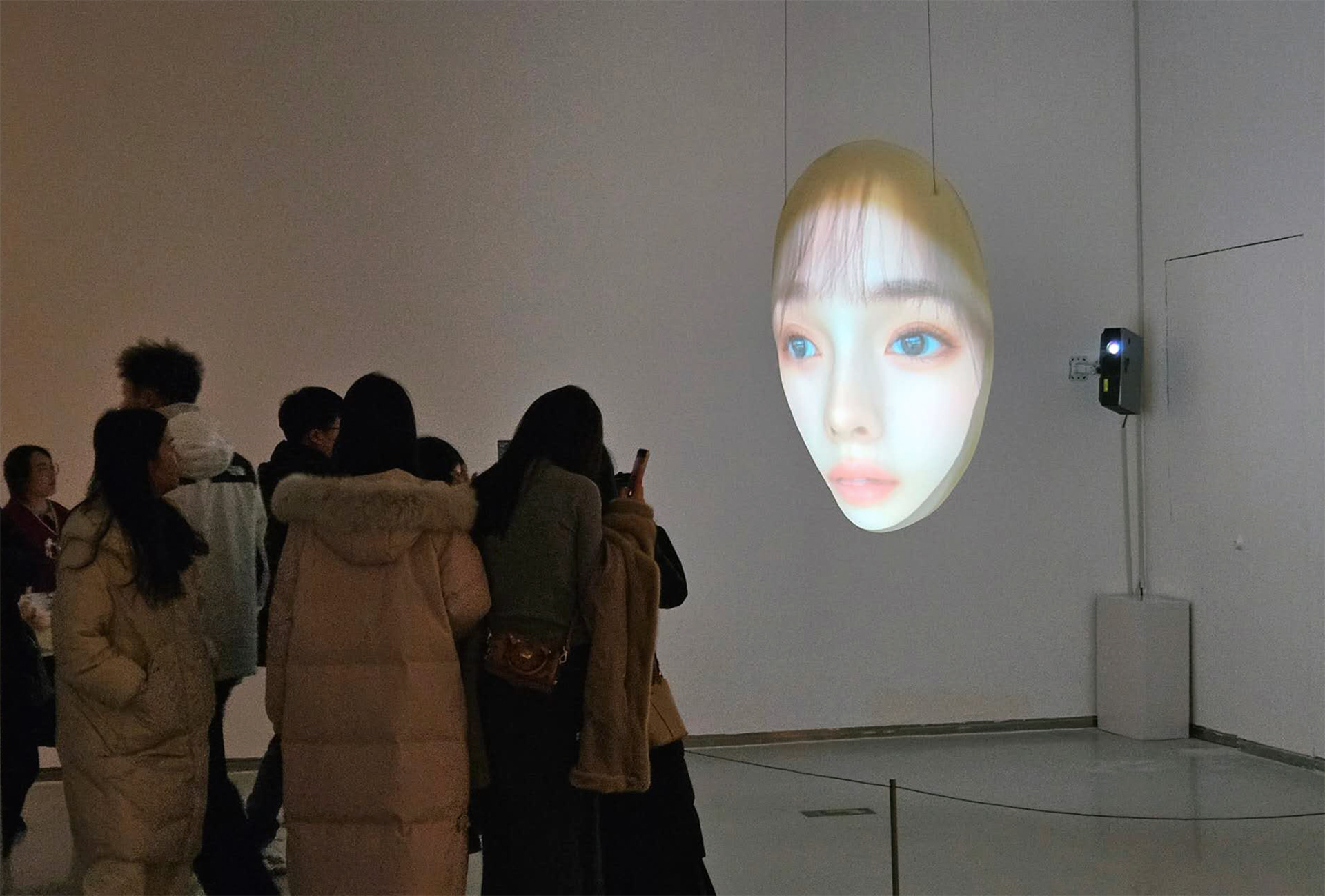
Projection Mapping / 3D printed Face, Video 10 min. loop, 2024
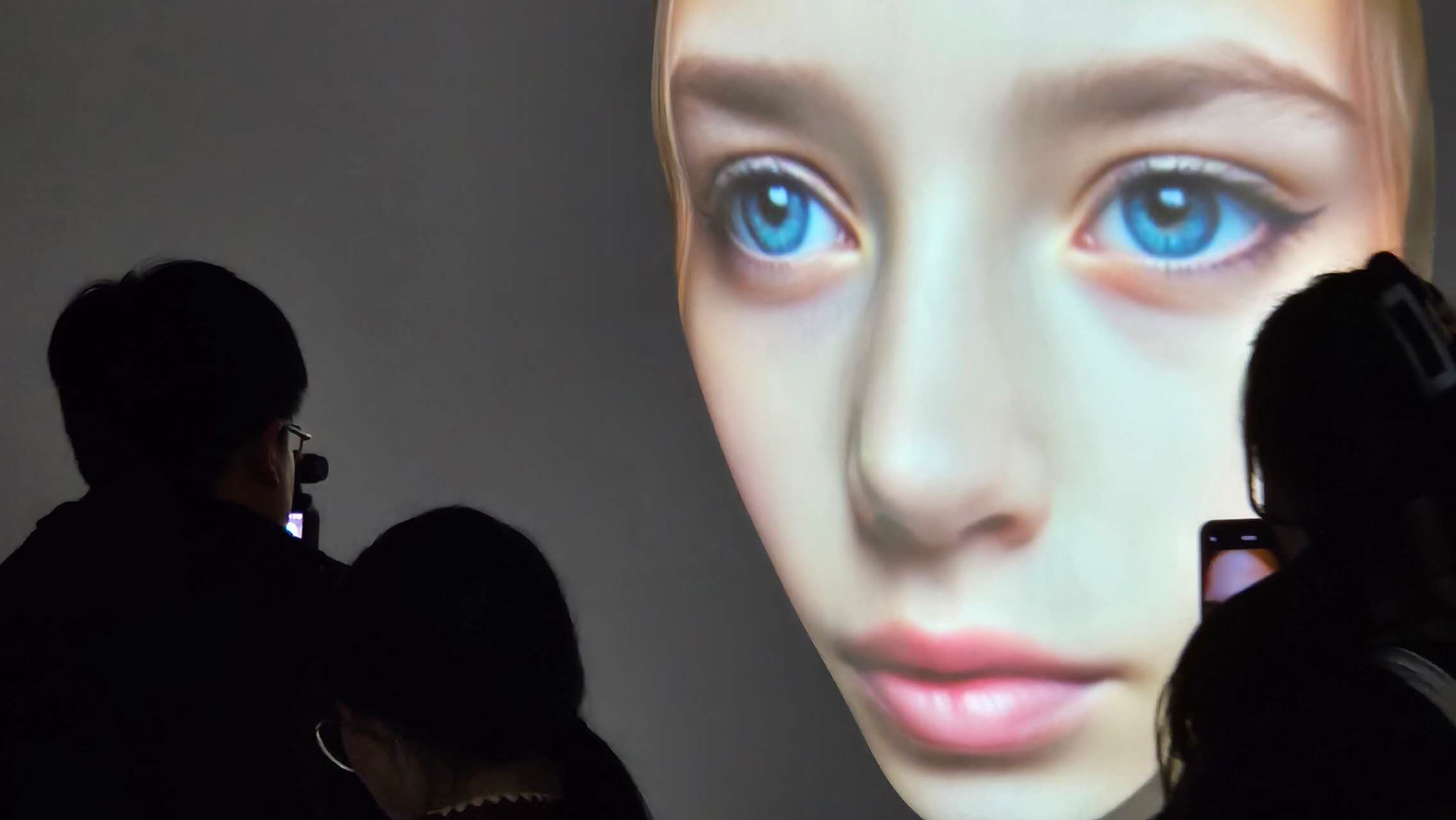
이 작품은 허공에 떠 있는 수많은 얼굴들을 보여준다. 이 얼굴들은 실제 인물이 아니라 AI가 생성한 얼굴들이다. 서로 다른 얼굴들은 끊임없이 변형(Morphing)되며 이어지고, 하나의 얼굴은 다른 얼굴로 스며들며 사라진다. 얼굴들은 더 이상 고정된 정체성을 지니지 않는다. 그것들은 생성과 소멸 사이를 떠다니는 흐름으로 존재한다.
1970년대, 내가 열두 살이었을 때의 일이다. 아픈 어느 날, 약을 먹고 잠들었다가 깨어 천장을 바라보았을 때 허공에 떠 있는 하나의 얼굴을 보았다. 그것은 천장으로부터 약 20cm 정도 떨어진 공간에서 나를 바라보고 있었다. 환영이었을 얼굴은 놀라울 정도로 생생했다.
그때 내가 느낀 감정은 공포가 아니었다. 오히려 존재하지 않지만 어딘가 존재할 것 같은 얼굴이 주는 묘한 친숙함이었다.
AI가 만들어내는 얼굴 또한 이와 닮아 있다. 그것들은 특정 인물을 재현하는 초상이 아니라, 수많은 얼굴 데이터의 통계적 조합을 통해 생성되는 알고리즘 얼굴이다. 이 얼굴들은 실제로 존재하지 않지만, 이미 존재했던 수많은 얼굴들의 흔적을 내포하고 있다.
우리는 이 얼굴들을 보며 낯설면서도 어딘가 익숙한 감각을 경험한다. 그것은 개인적 기억이라기 보다, 인간이 오랫동안 축적해 온 집단적 시각 기억(collective visual memory)이 불러오는 데자뷔(déjà-vu)에 가깝다.
이 지점에서 이 작품은 Jacques Lacan의 응시(the gaze) 개념과 만난다. 라캉에 따르면 인간은 세계를 바라보는 주체이면서 동시에 세계로부터 보여지고 있는 존재이다. 응시는 내가 어떤 대상을 바라보는 순간, 그 대상 또한 나를 바라보고 있다는 의식 속에서 발생한다.
허공에 마주 떠 있는 얼굴들은 관객이 바라보는 이미지이지만 동시에 관객을 바라보는 존재처럼 느껴진다. 관객은 얼굴들을 응시하지만, 동시에 그 얼굴들에 의해 응시당하고 있음을 경험한다. 이 순간 시선은 일방적인 것이 아니라 서로 교차하는 관계가 된다.
이 작품에서 얼굴들은 고정된 개체가 아니라 서서히 변형되는 흐름이다. 이러한 변화의 연속은 Gilles Deleuze의 ‘차이와 반복’의 사유와 연결된다. 반복되는 것은 동일성이 아니라 끊임없이 생성되는 차이이다. AI가 만들어내는 얼굴들은 서로 닮아 있지만 결코 동일하지 않으며, 그 변화와 유사성 속에서 인간 얼굴이라는 형상이 얼마나 유동적인 것인지 드러난다.
동시에 얼굴은 단순한 시각적 형태 이상의 의미를 갖는다. Emmanuel Levinas는 ‘타자의 얼굴’을 윤리의 출발점으로 보았다. 얼굴은 단순한 이미지가 아니라 우리에게 말을 걸고 관계를 요구하는 존재의 흔적이다. 우리는 타인의 얼굴을 마주할 때 그 존재와 관계 맺기를 시작한다.
허공에 떠 있는 얼굴들을 바라보는 순간, 관객은 그 얼굴들과 어떤 관계가 형성되는 듯한 감각을 경험한다. 그것은 단순한 시각적 경험이 아니라 타자와의 만남이 만들어내는 감각이기 때문이다.
이 작품의 공간 속에서 관객은 단순히 얼굴을 바라보는 관찰자가 아니다. 관객은 수많은 얼굴들 사이에서 다시 바라보이는 존재가 된다.
서로의 응시 속에서 수없이 미세한 감정들이 흐르며 관객의 감각을 잔잔하게 흔든다.
환영처럼 나타난 타인과의 시선 교환 속에서, 관객은 오히려 강렬한 존재의 리얼리티를 느끼게 된다.
환영처럼 나타난 타인과의 시선 교환 속에서, 관객은 오히려 강렬한 존재의 리얼리티를 느끼게 된다.
这件作品呈现出漂浮在空气中的无数张面孔。这些面孔并非真实人物,而是由人工智能生成的图像。不同的面孔不断发生变形(Morphing)并彼此衔接,一个面孔逐渐渗入另一个面孔,又在变化中消失。面孔不再拥有固定的身份,它们以一种在生成与消散之间漂浮的流动状态存在。
那是1970年代我十二岁时的一段记忆。某一天我生病了,吃了药睡着后醒来,当我抬头望向天花板时,看见一张漂浮在空中的面孔。那张脸大约离天花板二十厘米,在空气中静静地注视着我。也许那只是幻觉,但那张脸却异常真实而清晰。
当时我感受到的并不是恐惧,而是一种奇妙的熟悉感——一种虽然并不存在,却仿佛可能存在于某处的面孔所带来的亲近感。
人工智能生成的面孔与这种经验有着相似之处。它们并不是某个具体人物的肖像,而是通过大量面部数据的统计组合生成的算法面孔(Algorithmic Face)。这些面孔虽然并不真实存在,却内含着无数曾经存在过的面孔的痕迹。
当我们观看这些面孔时,会产生一种既陌生又熟悉的感觉。这种感觉与其说来自个人记忆,不如说更接近于人类长期积累形成的集体视觉记忆(collective visual memory)所唤起的既视感(déjà-vu)。
在这一点上,这件作品与 Jacques Lacan 的“凝视(the gaze)”理论相遇。拉康认为,人既是观看世界的主体,同时也是被世界观看的存在。凝视并不仅仅是观看的行为,而是在我们看向对象的同时,也意识到对象似乎在回望我们的瞬间所产生的经验。
漂浮在空中的这些面孔既是观众所观看的图像,同时又仿佛在注视着观众。观众凝视这些面孔的同时,也感受到自己正在被这些面孔所凝视。在这一刻,视线不再是单向的,而是一种相互交错的关系。
在作品中,面孔并不是固定的个体,而是一种缓慢变化的流动形态。这种持续的变化与 Gilles Deleuze 的“差异与重复”的思想相呼应。重复的并不是同一性,而是不断生成的差异。AI生成的面孔彼此相似却从不完全相同,在这种变化与相似之间,人类面孔这一形象的流动性被显现出来。
与此同时,面孔也具有超越视觉形式的意义。Emmanuel Levinas 将“他者的面孔”视为伦理的起点。面孔不仅是一种外在形象,更是一种向我们发出呼唤、要求建立关系的存在痕迹。当我们面对他人的面孔时,我们便开始与之建立关系。
当观众凝视这些漂浮的面孔时,会产生一种与它们建立联系的感觉。这不仅是一种视觉经验,更是一种与他者相遇的感受。
在这个作品的空间中,观众不再只是观看面孔的观察者。观众在无数面孔之间,成为再次被观看的存在。
在彼此的凝视之中,无数细微的情感缓缓流动,轻轻地触动着观众的感知。通过与这些如幻影般出现的他者进行视线交流,观众反而感受到一种强烈的存在的真实感。
This work presents numerous faces floating in midair. These faces are not real individuals but faces generated by artificial intelligence. Different faces continuously morph into one another; one face dissolves into another and gradually disappears. The faces no longer possess fixed identities. They exist as a drifting flow between generation and disappearance.
In the 1970s, when I was twelve years old, I had a strange experience. One day, while I was ill, I took some medicine and fell asleep. When I woke up and looked at the ceiling, I saw a face floating in the air. It was looking at me from about twenty centimeters below the ceiling. It might have been a hallucination, but the face appeared astonishingly vivid.
What I felt at that moment was not fear. Rather, it was a peculiar sense of familiarity — a face that did not exist, yet seemed as if it could exist somewhere.
The faces generated by AI resemble this experience. They are not portraits that represent specific individuals. Instead, they are Algorithmic Faces produced through statistical combinations of vast datasets of human faces. These faces do not belong to any real person, yet they contain traces of countless faces that have existed before.
When we look at these faces, we experience a strange mixture of unfamiliarity and familiarity. This sensation is less related to personal memory than to a collective visual memory accumulated throughout human history. It evokes a feeling close to déjà vu.
At this point, the work intersects with the concept of the gaze proposed by Jacques Lacan. According to Lacan, human beings are not only subjects who look at the world but also beings who are looked at by it. The gaze emerges when we realize that the object we are looking at seems to be looking back at us.
The floating faces appear as images observed by the viewer, yet they simultaneously feel as if they are observing the viewer. The spectator looks at the faces while experiencing being looked at by them. In this moment, vision is no longer one-directional but becomes a crossing relationship of gazes.
The faces in this work are not fixed entities but slowly transforming flows. This continuous transformation resonates with the philosophy of difference and repetition proposed by Gilles Deleuze. What repeats here is not identity but difference. The AI-generated faces resemble one another yet are never identical, revealing how fluid and unstable the form of the human face can be.
At the same time, the face carries meanings beyond a visual form. Emmanuel Levinas considered the face of the Other as the starting point of ethics. The face is not merely an image but a trace of presence that addresses us and demands a relationship.
When viewers encounter the floating faces, they begin to feel a subtle sense of connection with them. This experience goes beyond visual perception; it becomes an encounter with an Other.
Within the spatial environment of the installation, the viewer is no longer simply an observer of faces. Instead, the viewer becomes a being who is looked at again among countless faces.
Within this exchange of gazes, innumerable subtle emotions flow through the space, gently unsettling the viewer’s perception.
Through this illusory exchange of looks with spectral others, the viewer paradoxically experiences an intense sense of the reality of existence.
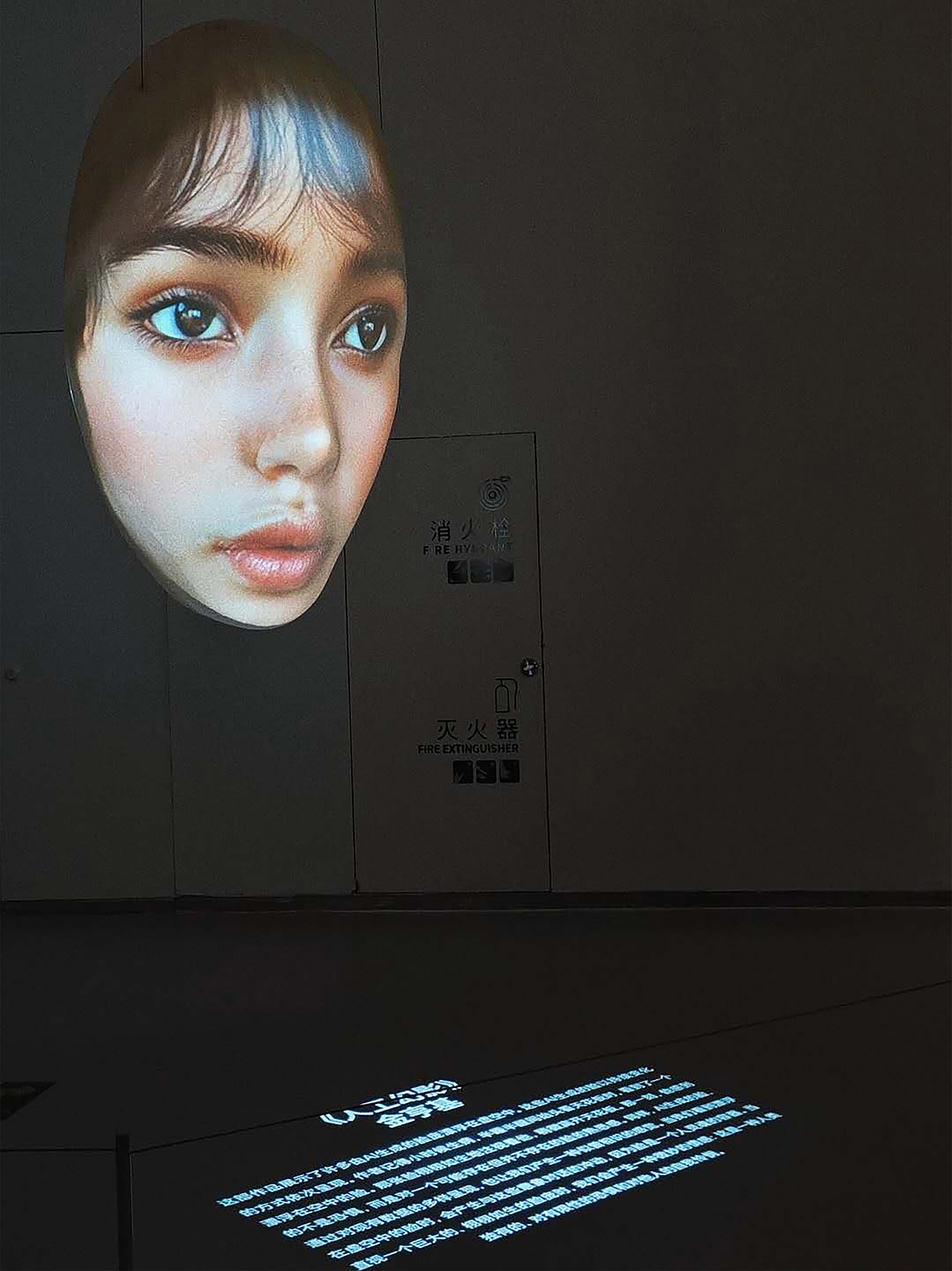
3 th Jinan Biennale, 2024,12-2025.04, Jinan, China